
German for Career Growth in Europe (July 2026)
Most people learning German for work know they need to reach B2. What is less obvious is that the thing keeping most learners below that line is not vocabulary or grammar but spoken output under time pressure. You can know every case ending and still freeze when your counterpart in Munich is waiting for your answer. This post walks through where German fluency actually pays off in European careers, what CEFR level you realistically need, and how long it takes to get there if you are training the right skill.
TLDR:
- Germany holds 23.7% of the Eurozone economy, and a 2024 Hiring Lab survey found only 2.7% of German job listings said German was not required.
- B2 German functions as the entry gate for senior technical and compliance-heavy roles, where English-only candidates often see lower compensation offers in these fields.
- One German certification covers three labor markets: Germany, Austria, and Switzerland, plus shared service centers in Poland, Czechia, and Lisbon.
- The FSI places German in Category II at roughly 750 classroom hours to reach professional proficiency; B1 takes 500 to 600 hours, with most of the gap to B2 being spoken output under pressure.
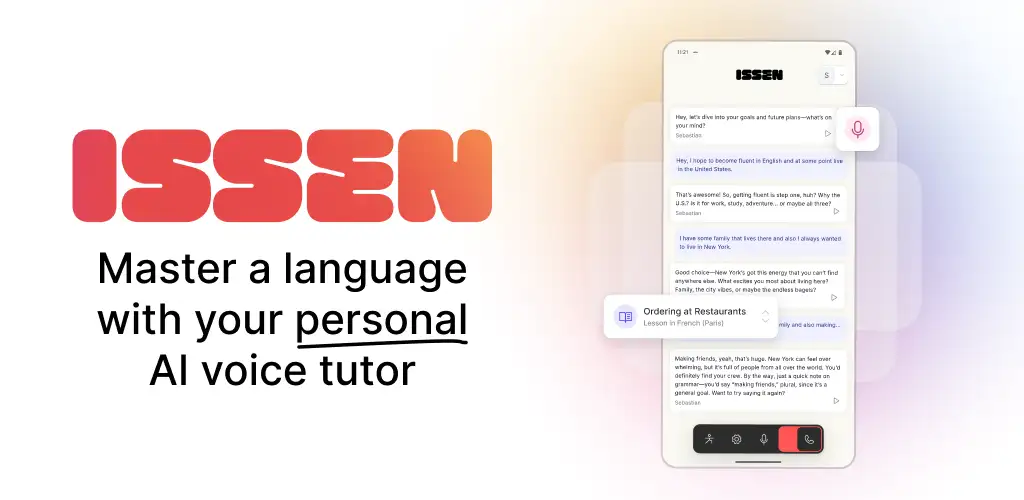
- ISSEN's AI voice tutor supplies daily German conversation reps with conversation-anchored SRS and background mode, filling the speaking volume gap a weekly human tutor alone cannot cover.
Why Germany's economy anchors European career opportunity
Germany runs the largest economy in Europe and the third-largest in the world, with a GDP of €4,470 billion in 2025 and a 23.7% share of the entire Eurozone economy. That gravitational pull matters for anyone thinking about where their language skills will actually get used.
Because so much European commercial activity flows through German-speaking headquarters, subsidiaries, and supply chains, demand for people who can operate in the language spreads well past Germany's borders. Austrian firms hire in German. Swiss firms hire in German. Multinationals with a Frankfurt or Munich anchor default to German for internal work even when their public face is English.
You do not need to live in Berlin to feel the effect. You need the language.
Industries where German fluency gives you a real edge
A few sectors reward German fluency more than any other second language you could bring.
- Automotive and mechanical engineering: Volkswagen, BMW, Mercedes-Benz, Bosch, and Siemens run engineering docs, supplier calls, and shop-floor coordination in German.
- Chemicals and pharma: BASF, Bayer, and Boehringer Ingelheim anchor a supply chain where regulatory files and technical specs move in German first.
- Financial services: Frankfurt hosts the ECB, and mid-market banking still runs in German.
- IT support and BPO centers across Poland, Czechia, and Portugal recruit German speakers to service DACH clients.
- Cross-border logistics: freight forwarders through Hamburg, Duisburg, and Rotterdam need staff who can handle German paperwork and phone calls.
Employers across these fields actively seek German speakers, often ahead of candidates with stronger technical credentials but no language.
How German fluency affects your hiring odds and earning potential
The short answer is yes, and the effect concentrates at the top of the pay scale. A 2024 Hiring Lab survey found that only 2.7% of German job listings stated German was not required, meaning the language sits as an unspoken baseline across nearly every posting you will see.
The pattern sharpens as salaries climb. Accounting, pharmaceuticals, and other high-paying fields carry the lowest language flexibility of any category, so B2 stops being a nice-to-have and starts functioning as the gate for anything above entry tier.
If you are aiming at senior technical or compliance-heavy roles, English alone pushes you toward the lower band of what the market pays. German fluency moves you into the range where compensation reflects the work.
Career mobility across the DACH region and beyond
One certification, three national labor markets. That is the practical shape of what German gets you, and choosing the right language learning apps for speaking makes a real difference in how fast you get there.
Switzerland pays the highest median salaries in Europe, and a B2 certificate transfers cleanly to Zurich, Basel, and Bern without a separate credential. Austria hires the same way, with Vienna's international agencies and Graz's automotive suppliers treating German competence as portable across the border. If Berlin's market cools in a given quarter, you can pivot to Vienna or Zug without rewriting your resume.
The mobility extends outward. Shared service centers in Krakow, Prague, Brno, and Lisbon staff entire floors of German-speaking analysts, accountants, and support engineers serving DACH clients from a lower cost base. Your language skill functions as a passport across at least six national labor markets, not a bet on one.
What CEFR level you actually need for work
Employers and immigration offices both speak in CEFR terms, so it pays to know where the thresholds land.
CEFR Level | What you can do | Work relevance | Key milestone |
|---|---|---|---|
A2 | Follow shop signs and basic small talk | Not enough to work in German | n/a |
B1 | Hold a real conversation, follow a standup, pass an integration exam | Entry threshold for immigration pathways; not the meetings-and-emails standard most employers expect | Often cited for Germany's Niederlassungserlaubnis; verify current requirements with BAMF or your local Ausländerbehörde |
B2 | Meetings, emails, client calls, and standups without slowing the room down | The working line: entry gate for senior technical and compliance-heavy roles | ~750 FSI classroom hours from zero; roughly 200 to 300 hours beyond B1 |
C1 | Leadership meetings, licensed professions, negotiation-heavy work | Where the highest-paying roles and licensed professions open up | Consistent practice over multiple years in your industry's register |
Here is what most learners find out too late. A year of A2 classroom German usually puts your grammar closer to B1 than you think. What separates you from B2 is spoken output and real-time listening under pressure, the exact skill classroom hours leave underdeveloped.
How long it actually takes to reach working German
Setting a realistic timeline matters more than motivation posters. The Foreign Service Institute places German in Category II, estimating roughly 750 classroom hours for an English-speaking adult to reach professional working proficiency. That is the institutional benchmark, not an ISSEN promise.
Here is how those hours break down in practice:
- B1 conversational German: 500 to 600 hours of combined study and speaking practice. Enough to hold a real conversation, follow a standup, and pass the integration exam.
- B2 working German: another 200 to 300 hours, most of it spent producing spoken output under time pressure, not drilling grammar rules.
- C1 professional German: consistent practice over multiple years, with regular exposure to the register your industry uses.
At an hour a day, B1 lands between 18 and 24 months. Two hours a day cuts that in half. What you control is how much of each hour trains the skill you need at work, which for most people is speaking, and understanding how AI speaking practice works helps you use that time well.
Why speaking practice is the hardest gap to close
Grammar books and vocabulary apps train the half of your brain that recognizes language. They do little for the half that has to produce it in real time. Merrill Swain's Output Hypothesis (1985) argued that comprehensible input alone leaves a gap, and that learners only notice what they cannot yet say when forced to say it under conversational pressure.
German makes that gap especially visible. Case endings must be selected before the noun leaves your mouth. Verbs land at the end of subordinate clauses, so you have to hold the whole sentence in working memory while assembling it. Modal particles like doch, ja, and mal carry meaning no textbook drill teaches.
You close the gap by producing German out loud, getting corrected, and doing it again tomorrow. That is a process that building German fluency with AI through daily conversation supports directly.
How ISSEN supports German learners building spoken fluency
That daily repetition is what ISSEN is built to supply. Our AI voice tutor holds real German conversations, adjusting vocabulary and pacing to your CEFR level inside every turn, without a booking calendar or per-session fee.
A few pieces matter for German in particular:
- Smart turn detection lets you finish a subordinate clause with the verb at the end, no push-to-talk cutting you off mid-thought. That is a feature that separates serious AI language apps for advanced learners from basic conversation tools.
- Personalized language learning apps that adapt to you work best when review is tied to real usage, and ISSEN's conversation-anchored SRS pulls each new word into a flashcard tied to the sentence you used it in, article and case ending intact.
- Background and lock-screen mode turns your U-Bahn ride or dog walk into speaking reps.
A weekly human tutor still helps for correction and accountability. ISSEN fills the daily volume gap between those sessions. Start a 10-minute conversation with ISSEN.
Final thoughts on building a career with German language skills in Europe
The economics are straightforward: German fluency raises your hiring odds, raises your ceiling in high-paying fields, and makes your skills portable across multiple labor markets instead of locking you into a single city. What stands between most learners and that outcome is the speaking gap, the distance between knowing German and producing it under pressure.
Consider Anja, a logistics analyst in Warsaw. Her company just signed a distribution contract with a Munich firm, and she has eight months to hit B2 before the joint kickoff meeting. Her reading is already solid. She passed B1 two years ago, but real-time spoken German under time pressure is the gap. Each day she spends waiting for a weekly tutoring slot is a day the gap stays open. The kind of AI voice tutor that supplies daily conversation reps, adjusts difficulty turn by turn, and ties new vocabulary to the sentences she actually uses is exactly what closes that distance efficiently. As those tools continue to narrow the gap between a weekly tutor and daily spoken practice, more learners like Anja will hit their target level on a real-world deadline. You close that distance through daily spoken output, and ISSEN is built to supply exactly that. Start a 10-minute conversation with ISSEN and begin closing that gap today.
FAQ
What German level do you actually need to get hired in Germany?
B2 is the working threshold for most roles where you interact with colleagues, clients, or documentation in German. B1 satisfies integration exam requirements and the Niederlassungserlaubnis pathway, but stops short of the meetings-and-emails standard most employers expect. Confirm current requirements with the BAMF or your local Ausländerbehörde before making residency plans.
How long does it realistically take to go from zero to B2 German as an English speaker?
The Foreign Service Institute places German in Category II at roughly 750 classroom hours to professional working proficiency. In practice, B1 conversational German runs 500 to 600 combined study and speaking hours; B2 adds another 200 to 300, most of it in spoken output under time pressure. At one hour of daily practice, expect B1 in 18 to 24 months. What you control is how much of each hour trains speaking in particular, since that is where classroom study leaves the largest gap.
Can I use ISSEN to practice German without interrupting my sentence mid-clause?
Yes. ISSEN uses smart turn detection, which means the AI waits for you to finish a full subordinate clause before responding. For German, where the verb lands at the end of a dependent clause, that matters: push-to-talk systems cut you off before you can complete the grammatical structure you are trying to produce.
Duolingo vs ISSEN for learning German at B1 and above?
Duolingo builds early vocabulary and reading recognition, which has real value at A1 and A2. Above B1, the daily streak model does not generate the spoken output volume you need to pass a German integration exam or hold your own in a work standup. ISSEN focuses on real-time voice conversation, so the practice hours go toward the skill the exam and the employer are actually testing.
How does ISSEN help build spoken German vocabulary beyond conversational fluency?
ISSEN generates flashcards tied to words and phrases from your actual conversation history, with each card preserving the original sentence context, including the article and case ending. For German, where gender and case must be retained together with the word, that context is the difference between a card that builds real recall and one that is just an isolated vocabulary item.